Cowork changed how I think about AI
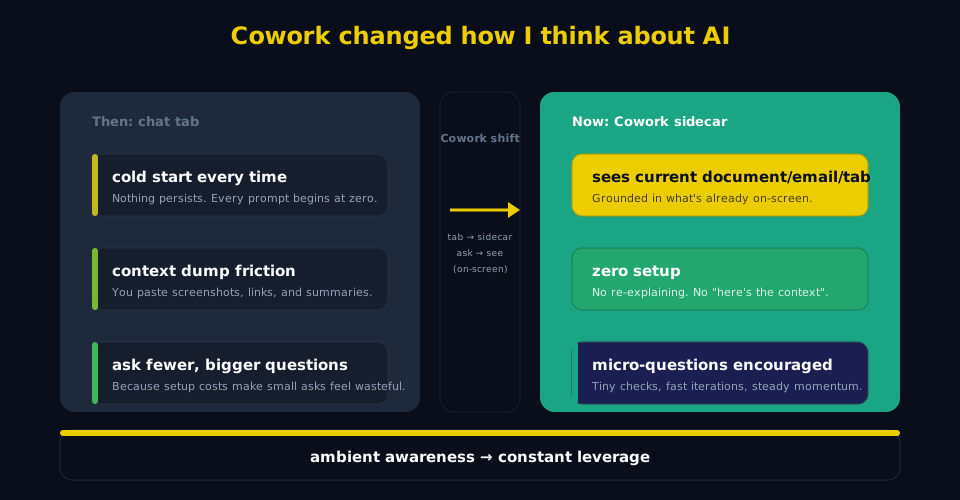
For a year my pattern was: new tab, paste context, get an answer, close. Every useful reply started with a paragraph of scene-setting. The model never saw the spreadsheet, the thread, or the half-written doc unless I described them.
Cowork in Claude Desktop sits beside the work—same screen, same email, same PDF. I ask “where’s the ask in this thread?” and it already sees the thread. The session feels ambient: short questions, no preamble tax.
What actually changed for me #
The biggest shift: I stopped having to describe context. When I’m reading a long email thread and ask “what’s the actual ask buried in here?”, Claude already sees the thread. When I’m drafting a document and ask “does this section contradict what I said earlier?”, it already has the earlier section. The setup cost dropped to zero.
The second shift: smaller questions, more often. Opening a cold chat meant earning the right to burn tokens on setup. In Cowork, “is this phrasing clear?” costs two seconds because the visible paragraph is already in scope.
Where it helps most #
- Email triage — scanning long threads and surfacing the decision point or action item
- Document review — catching inconsistencies, suggesting tighter phrasing, flagging gaps
- Meeting prep — pulling context from open tabs and recent documents into a quick brief
- Research synthesis — summarizing what’s on screen alongside what I’ve already read
Where it falls short #
Cowork is ambient, which means it sees what’s visible. Claude Code still wins for filesystem access, database queries, running commands, and writing into a repo. For that work I switch surfaces. Cowork is the thinking companion; Claude Code is the execution engine.
The real pattern #
The assistants I get the most value from are the ones that reduce the cost of asking a question. Cowork does this by eliminating context setup. Claude Code does it by putting tools in the same session as the conversation. I use both daily; the work shape picks the surface.