Memory across sessions
Third time in one week I pasted the same paragraph about structured API telemetry and which fields to redact. Each session helped for an hour, then woke up with amnesia. I was burning the opening of every turn on re-teaching policy.
/remember broke the loop. I stored the logging rules once; the next session opened with Claude quoting them back before I typed. Decisions lived outside my head and outside the transcript scroll—same baseline I carry, now shared with the tool.
Here is what changed.
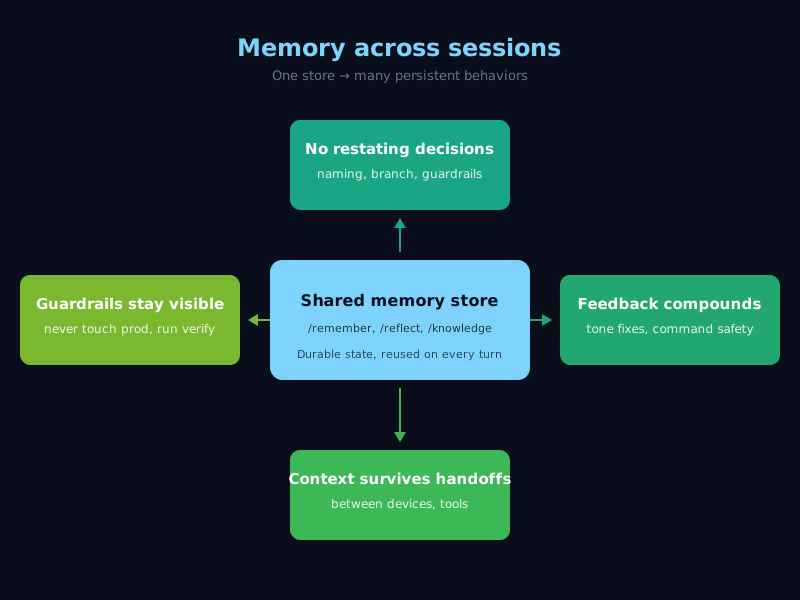
I stopped restating decisions. Any choice that survives past a single session belongs in memory. Default branches, naming conventions, performance guardrails, stakeholder quirks — I log them with /remember. When I return on Tuesday, Claude already knows we prefer optimistic locking in this service or that we never merge without pnpm test. We both reclaim the sixteen messages that used to be spent warming up.
Feedback compounds. When a response misses the tone or includes an unsafe command, I add a note through /reflect. The next time Claude drafts a message or proposes a migration, it applies the correction before I type anything. The assistant evolves alongside the project instead of replaying rookie mistakes.
Context survives handoffs. When I switch from Claude Code to Cowork or bounce between devices, the shared memory makes each surface feel like one collaborator. /knowledge entries store architecture docs, decision logs, even snippets of schema history. Claude can cite the relevant line immediately. I no longer keep a separate scratchpad to bridge gaps between sessions.
Guardrails stay visible. Some constraints exist to prevent real damage — “never touch prod from dev tunnels,” “rotate the client secret after every demo,” “run /gsd-verify-work before handing off.” I encode those rules the moment they matter so future me cannot forget them under deadline pressure. Claude pulls them into the conversation before I drift toward a mistake.
Memory still requires maintenance. If a preference changes, I update or delete the note. I treat the memory system like a lightweight runbook: living, versioned, minimal. The payoff is unmistakable. Each morning I collaborate with the same assistant-shaped baseline: it still holds the last debugging trail, the experiment that succeeded, and the ones that failed for good reasons. The work feels additive again.